~/PROJECT
Tier Cloud: Architecting a No-Code Interface for Complex Pricing Infrastructure
I was Founding Engineer, Lead Designer & DevRel @ Tier.run and it took us 4 months from ideation to beta launch .
- Product Strategy
- UX Design
- Full-Stack Implementation
- User Research
At Tier.run, our core mission was to untangle the mess of implementing SaaS pricing. Our initial offering centralized complex billing logic (metering, grandfathering, entitlements) behind a single pricing.json file and SDK.
While the technical architecture was robust, I identified a critical friction point through customer interactions: as companies scaled, the pricing.json became unmanageable for developers and completely inaccessible to Product Managers - the very people responsible for pricing strategy.
I led the end-to-end development of Tier Cloud, a collaborative, browser-based platform that transformed pricing from a static config file into a dynamic, visual product workflow. This shift empowered PMs to own pricing strategy without writing code and streamlined the handoff to developers.
The Challenge: The “PriceOps” Bottleneck
Tier’s initial premise was “pricing as code.” We firmly believed that pricing logic should live in the codebase, versioned alongside features.
However, as our early adopters grew, reality set in. Through monitoring our GitHub issues and conducting direct calls with users, I uncovered a recurring pattern of friction:
-
The JSON Unreadability Trap: As pricing models added tiers, complex metering, and grandfathered plans, the pricing.json file grew exponentially. It became brittle and difficult for even the original authors to parse.
-
The Stakeholder Exclusion: Product Managers, finance leads, and CEOs - the decision-makers - could not read or edit JSON. Every minor price adjustment turned into a Jira ticket, slack threads, and reliance on engineering resources.
-
The “Blank Canvas” Paralysis: New users often struggled with how to structure their pricing. I learned that most companies don’t invent pricing; they adapt existing models from competitors.
The core insight: We had solved the technical implementation of pricing, but we had failed the operational workflow of pricing strategy. We needed to decouple pricing definition from pricing implementation.
The Strategy & Solution: Tier Cloud
Based on this research, I defined the vision for Tier Cloud. It needed to be a “WYSIWYG for SaaS Pricing” that maintained the integrity of our “infrastructure-as-code” philosophy.
I spearheaded the design and development of Tier Cloud around four strategic pillars:
1. The Visual Pricing Builder (No-Code Definition)
We needed to move the source of truth from a raw text editor to a structured UI.
-
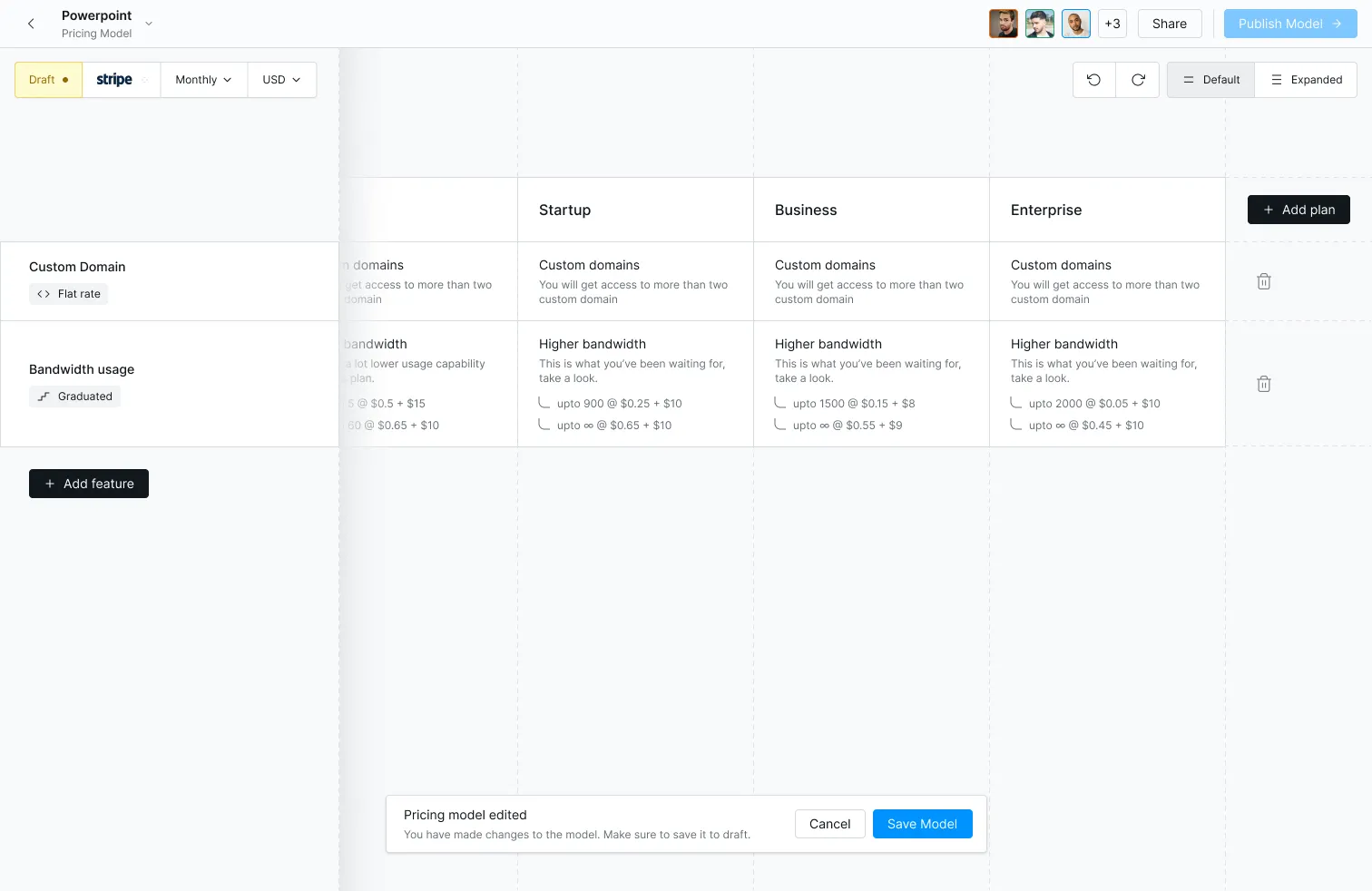
The UI had to handle immense complexity (nested tiers, varied metering gauges, currency scales) without overwhelming the user. I designed a component-based interface that allowed users to visually model plans, define features as entitlements, and set usage limits using natural language concepts rather than raw JSON syntax.
-
Outcome: A PM could now model a complex “hybrid” pricing structure in minutes without fearing a syntax error.
2. Collaborative Workflows
Pricing is never a solo decision. It involves iteration and sign-off across departments.
-
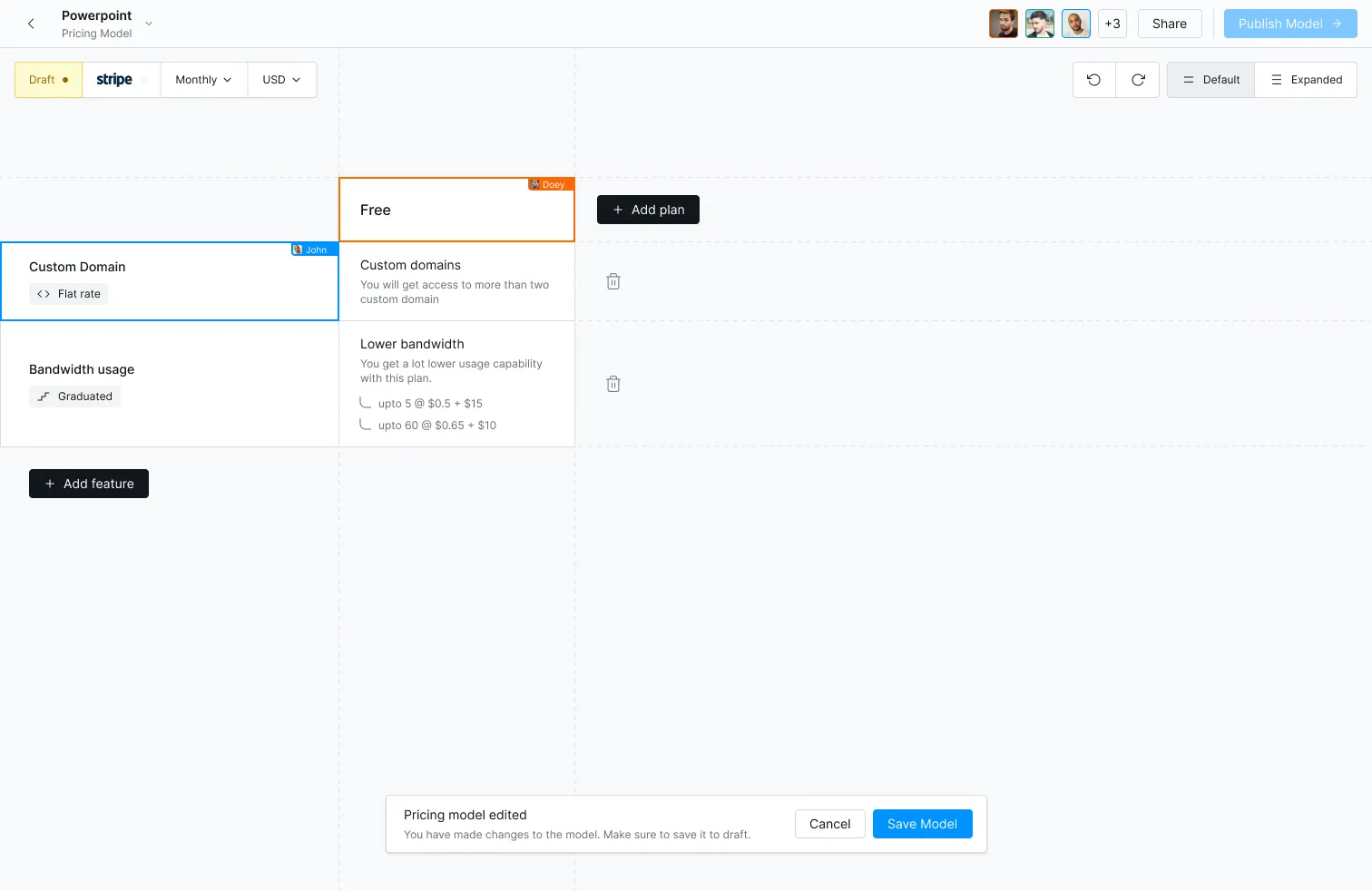
We moved away from local file management to a cloud-based, multi-player environment. I implemented role-based invites, allowing a PM to draft a model and invite the CEO or Finance team to review it directly in the browser, eliminating endless email chains of spreadsheet attachments.
-
Outcome: Faster iteration cycles on pricing strategy and centralized decision history.
3. Solving the “Blank Canvas” with Templates
To reduce activation friction, we couldn’t let users start from zero.
-
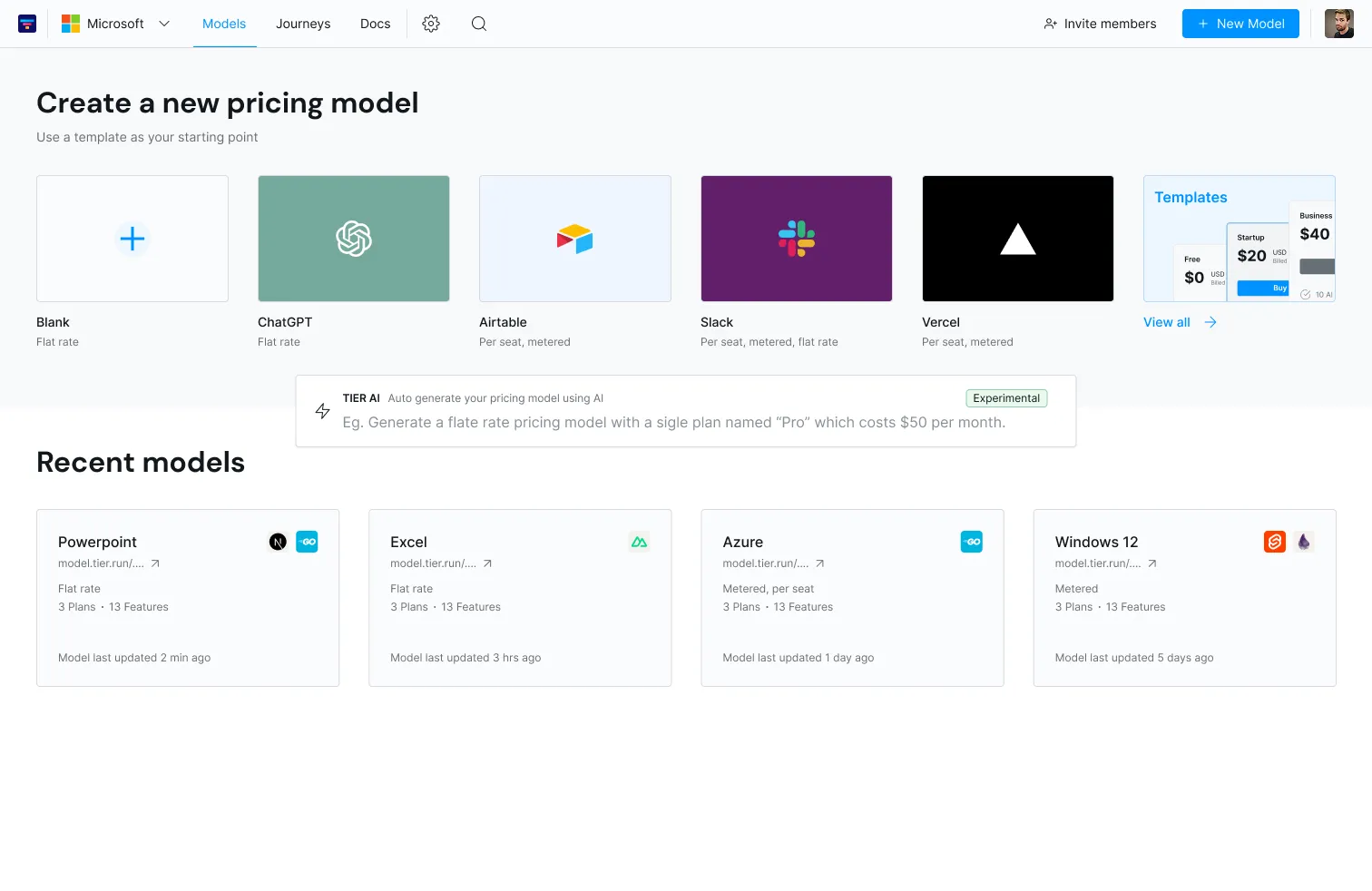
Leveraging the insight that users adapt existing pricing models, I curated and modeled the most common SaaS pricing structures (e.g., “Usage-Based like Vercel,” “Tiered Seats like Slack,” “Freemium with Upsell like Airtable”, etc..).
-
Outcome: New users could select a template that matched 80% of their needs and customize the remaining 20%, drastically reducing the time-to-value.
Results & Impact
As an early-stage startup, our success wasn’t measured in millions of MAUs, but in velocity and qualitative shifts in customer behavior. Tier Cloud fundamentally changed how our customers interacted with our product:
-
Shifted Ownership: We successfully moved the ownership of pricing definition from Engineering back to Product Management for our key customers.
-
Reduced Support Volume: Questions related to JSON syntax errors or misconfigured metering dropped significantly as the UI enforced valid structures.
-
Accelerated Sales Cycles: The Template library allowed us to demonstrate value to prospects faster during sales demos by instantly modeling their desired pricing structure.
It transformed Tier from a purely technical developer tool into a strategic business platform.
The Tier Ecosystem
While Tier Cloud was the strategic center, I also drove ancillary projects to support the ecosystem:
-
Tier Docs: Overhauled information hierarchy for end-to-end tutorials and CLI guides, and redesigned the entire documentation.
-
Vercel Templates: Built early AI SDK examples to showcase metered pricing by building a real world AI product template to showcase how Tier.run would be used in production.
-
Pricing Section Components: Created curated, Tailwind-based UI components for Svelte/React/Vue to help developers visualize the pricing models built in Tier Cloud, this would be the most dynamic drop-in pricing table in the market.

Hey thank you for coming out here and checkin’ out my projects, I’m always curious to know what you think about them. Please get in touch with me if you have any query and do explore more of my projects. You can see some under “Featured projects”.
Featured projects
2021 - 2022 / Incredible
Incredible Studio
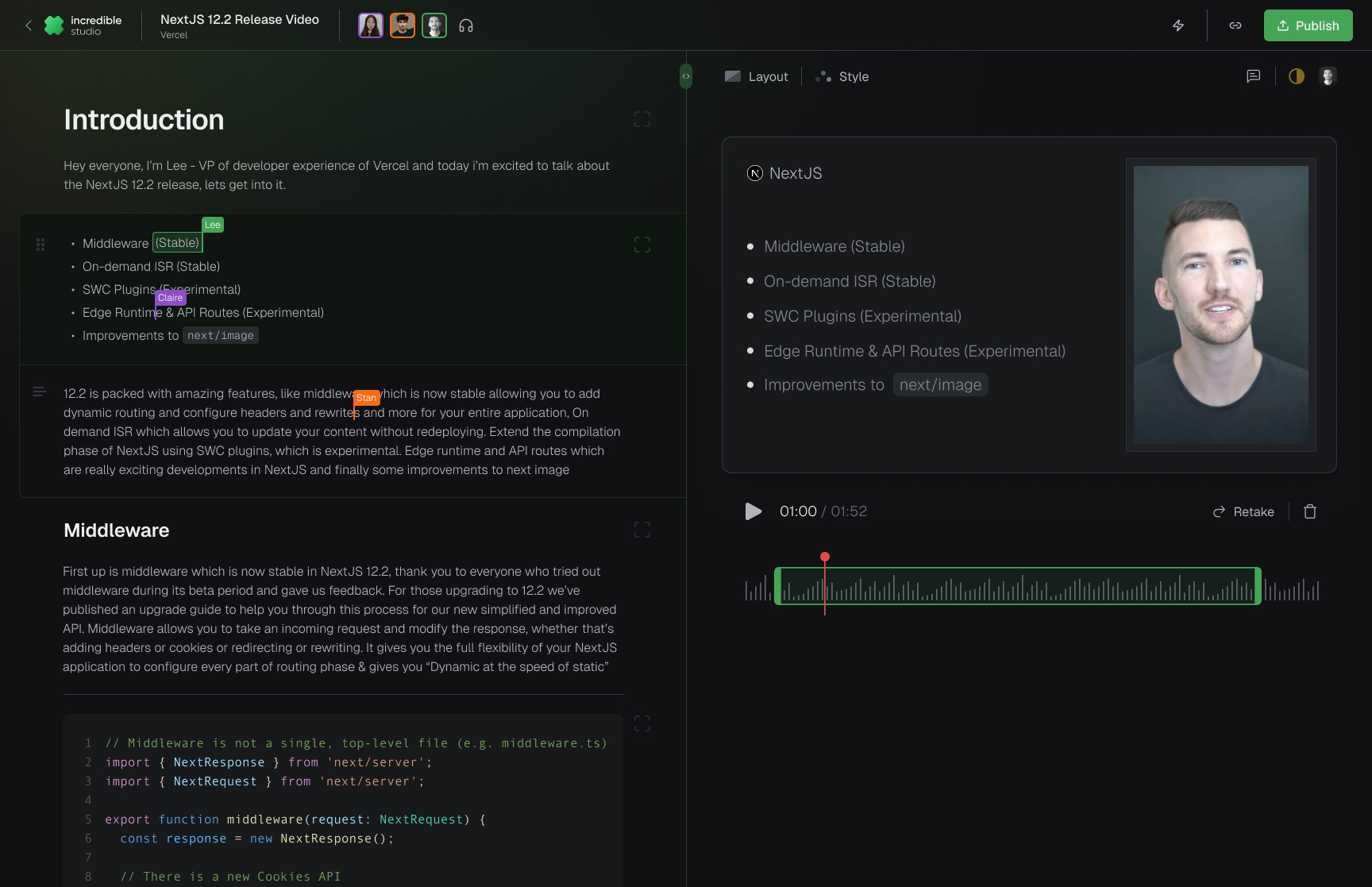
End‑to‑end workspace for scripting, block‑by‑block recording, lightweight edits, and publishing with collaborative assignments and async workflows.
2015 - 2017 / CatalanLabs
Strata
A spatial computing (3D windowing) architecture built from scratch on Wayland + EGL; spatially anchored windows with occlusion ordering, and uses basic 6DOF and gesture inputs with a custom compositor.

2013 - 2014 / Orion
Code Quality Monitoring
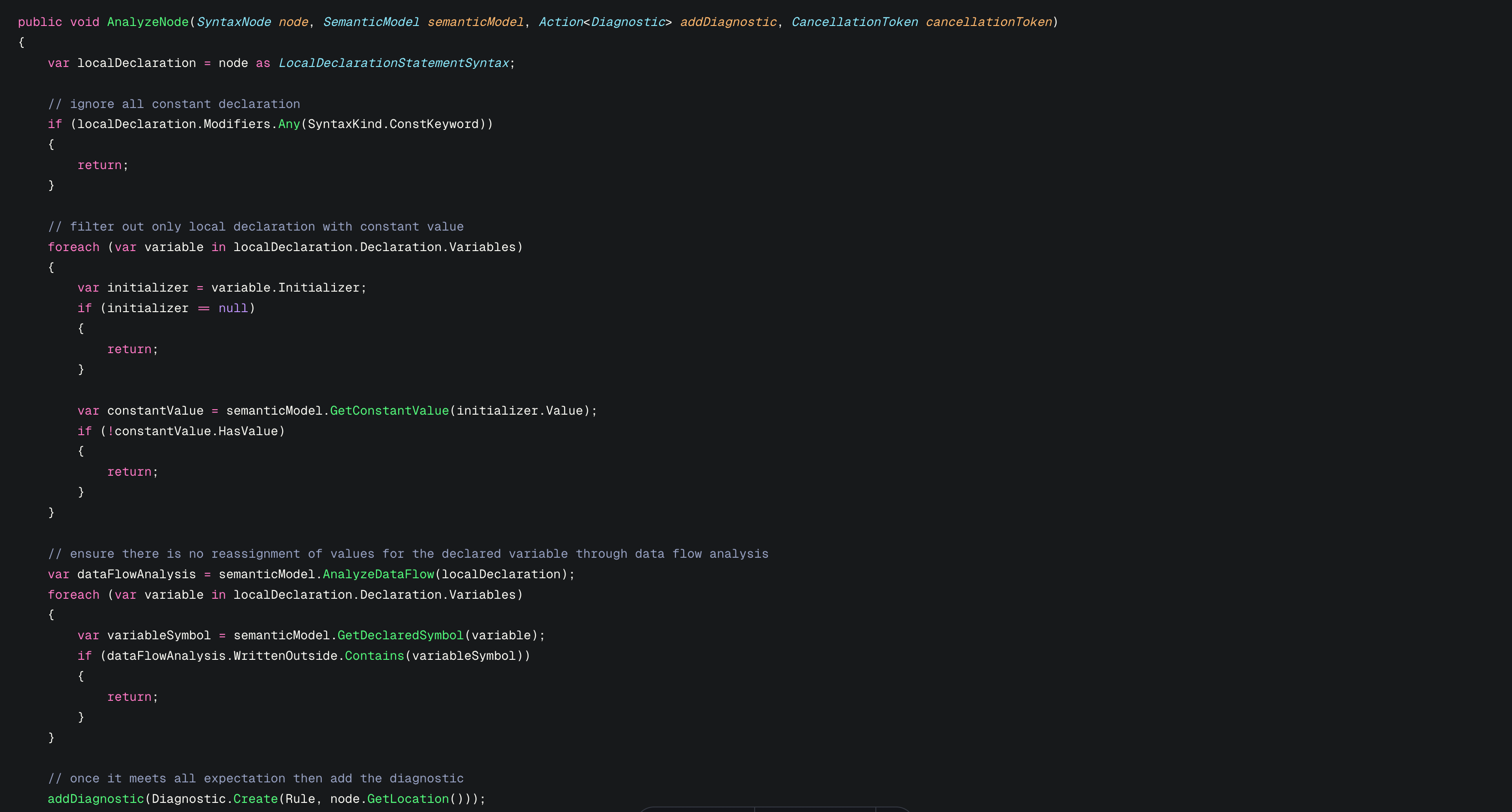
Static analysis built on the Roslyn compiler to inspect C#/VB.NET ASTs, enforce standards, surface anti‑patterns, and suggest fixes—integrated with Visual Studio as VSIX plugin for organization-wide governance.